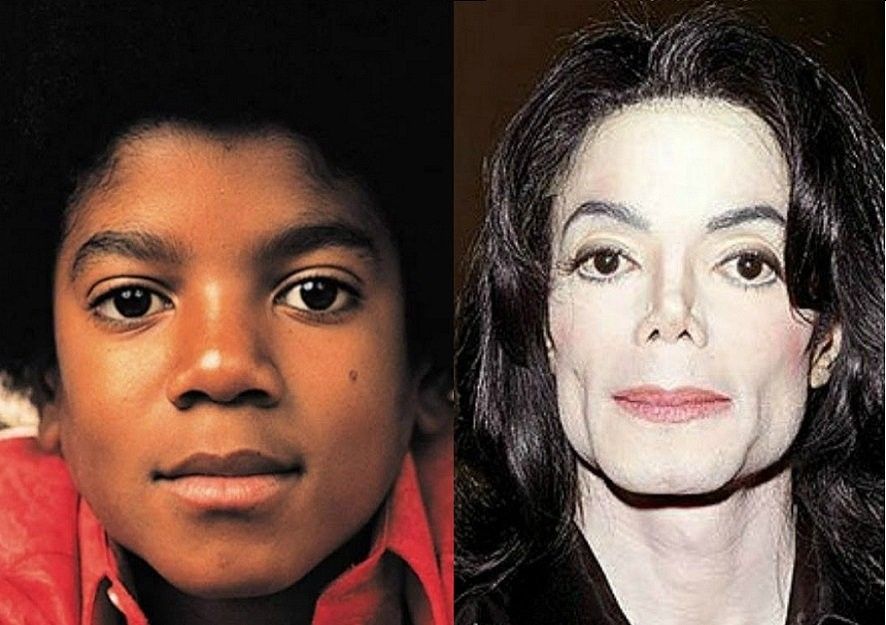
For decades, one of the most persistent questions surrounding Michael Jackson was the dramatic change in his skin color. The King of Pop — born African American with a rich brown complexion — appeared increasingly pale over the course of the 1980s and 1990s, eventually presenting with near-white skin for the final two decades of his life. The public speculation was intense, the accusations were sometimes cruel, and the truth was far more medically significant than most people understood at the time.
Michael Jackson had vitiligo — a confirmed, documented autoimmune disease that destroys the pigment-producing cells in the skin. This is not a matter of debate, rumor, or speculation. It is a medical fact confirmed by his doctors during his lifetime, and officially verified in the Los Angeles County Coroner’s autopsy report following his death in 2009.
Michael Jackson had vitiligo universalis — a severe form of vitiligo affecting 80–90% of the body surface, causing near-complete loss of skin pigmentation. His dermatologist Dr. Arnold Klein confirmed the diagnosis in the 1980s. Jackson publicly acknowledged the condition in his 1993 interview with Oprah Winfrey. The 2009 autopsy report officially documented “patches of light and dark pigmented areas” on his body, confirming the diagnosis beyond any doubt.
What Is Vitiligo?
Vitiligo is an autoimmune disease in which the body’s immune system mistakenly attacks and destroys melanocytes — the pigment-producing cells responsible for giving skin, hair, and mucous membranes their color. When melanocytes are destroyed, the affected areas lose their pigmentation and appear white or significantly lighter than surrounding skin.
Vitiligo affects people of all ethnicities, ages, and genders. It is estimated to affect 1–2% of the global population. While not life-threatening or contagious, vitiligo can cause profound psychological distress, particularly when it affects the face or visible areas of the body — and most particularly when it affects people with darker skin tones, for whom the contrast between pigmented and depigmented skin is most visually apparent.
Key Facts About Vitiligo
- Vitiligo is an autoimmune disease — not a cosmetic issue or a choice.
- It is not contagious and cannot be transmitted by touch or proximity.
- It affects all skin types but is more visually pronounced in people with darker skin.
- The cause is not fully understood but involves genetic susceptibility triggered by environmental or autoimmune factors.
- There is no cure, though treatments can slow progression, restore some pigment, or even out skin tone.
- It is believed to have a genetic component — it can run in families.
Michael Jackson’s Diagnosis — When and How
Michael Jackson’s vitiligo was diagnosed by his dermatologist, Dr. Arnold Klein, in 1986. At that point, Jackson had been noticing uneven patches of lighter skin developing — symptoms that had reportedly begun in the early 1980s, around the time of the Thriller era. Jackson himself later stated that the condition began after Thriller’s release and that initially he did not know what it was.
In the early stages, the patches of depigmentation were manageable with makeup and camouflage techniques. As the 1980s progressed, the vitiligo advanced and the patches became more extensive and harder to conceal. This is the period in which Jackson’s appearance began changing most visibly to the public.
Jackson also had a concurrent diagnosis of discoid lupus (chronic cutaneous lupus erythematosus) — another autoimmune condition that can affect the skin. The two conditions occurring together is not unusual, as autoimmune diseases often present in clusters in genetically susceptible individuals.
Also Read:
The 1993 Oprah Winfrey Interview — Jackson Speaks Publicly
For years before 1993, Michael Jackson had faced relentless public speculation and accusations that he was deliberately bleaching his skin, motivated by a desire to “look white” or a rejection of his African American identity. The accusations were painful, hurtful, and — as medical evidence confirms — entirely false.
On February 10, 1993, Michael Jackson gave a landmark television interview with Oprah Winfrey — his first major television interview in 14 years. During the interview, Oprah asked Jackson directly about his skin. His response was clear and unambiguous:
“I have a skin disorder that destroys the pigmentation of my skin. It is something I cannot help. When people make up stories that I don’t want to be who I am, it hurts me.”
He confirmed that he had vitiligo, explained that it affected his ability to be in the sun, and stated firmly that he had never tried to change his skin color by choice. He was visibly emotional during the exchange — a rare moment of vulnerability from an intensely private public figure.
The interview was watched by approximately 90 million Americans — at the time one of the most-watched television events in history. For millions of people, it was the first time they had heard of vitiligo.
Vitiligo Universalis — Michael Jackson’s Specific Form
Michael Jackson was diagnosed with vitiligo universalis — the most extensive form of vitiligo, defined as depigmentation affecting 80–90% or more of the body surface. This form of the disease involves near-complete loss of skin pigmentation across the entire body.
| Type of Vitiligo | Body Area Affected | Description |
|---|---|---|
| Localized | Small, isolated areas | Patches confined to one location |
| Segmental | One side of the body | Follows a dermatomal pattern; often early onset |
| Generalized | Multiple areas, both sides | Most common form; scattered patches |
| Universal | 80–90%+ of body surface | Near-complete depigmentation; Michael Jackson’s form |
In Jackson’s case, experts believe his vitiligo evolved from localized patches in the early 1980s to near-universal depigmentation by the mid-to-late 1990s. The progression to vitiligo universalis is relatively uncommon but well-documented medically. Once most of the body’s melanocytes are destroyed, the skin has no remaining natural pigment — resulting in the near-white complexion Jackson had for the final decade of his life.
How Jackson Managed His Vitiligo
Michael Jackson used several approaches to manage his vitiligo, as documented by his medical team and confirmed by dermatological experts:
Camouflage Makeup
In the early stages of his vitiligo, when patches were still localized, Jackson used fair-colored theatrical and cosmetic makeup to even out the appearance of his skin tone during performances and public appearances. This is a standard approach recommended by dermatologists for visible vitiligo.
Skin-Bleaching Prescription Creams (Depigmentation)
As the vitiligo progressed to affect the majority of his body, Jackson’s dermatologist prescribed depigmentation therapy — a medically recognized treatment for extensive vitiligo that uses agents like monobenzone to remove the remaining pigment from still-pigmented areas, creating a single, even skin tone across the body.
This is the treatment that most directly explains Jackson’s transition to a uniform very pale skin tone. Depigmentation therapy is irreversible — once applied, it permanently removes remaining pigment. It is recommended in cases of very extensive vitiligo when the loss of remaining pigment is judged preferable to the psychological and practical challenges of maintaining dramatically uneven skin tone.
The use of these creams is what some critics inaccurately described as “skin bleaching for cosmetic purposes.” It was, in fact, a medically prescribed treatment for a diagnosed autoimmune disease.
Also Read: What Disease Does Jada Pinkett Smith Have?
Sun Protection
Depigmented skin has no melanin to protect against UV radiation and burns extremely easily. Jackson wore protective clothing, used high-SPF sunscreens, and avoided prolonged sun exposure as a medical necessity — not a personal preference or eccentricity.
The 2009 Autopsy Confirmation
Michael Jackson died on June 25, 2009. His autopsy was conducted by the Los Angeles County Coroner. The official autopsy report explicitly documented vitiligo as a confirmed finding, noting “patches of light and dark pigmented areas of skin” on his body. The University of Massachusetts Vitiligo Clinic & Research Center has cited this autopsy finding as definitive confirmation of the diagnosis.
The autopsy report also confirmed the presence of discoid lupus. Dr. Christopher Rogers, who conducted the autopsy, confirmed that Jackson had vitiligo. This official post-mortem medical documentation ended decades of public speculation with a clear medical verdict: Michael Jackson had vitiligo. He had been telling the truth all along.
The Iconic White Glove — A Medical Story
One of Michael Jackson’s most recognizable style signatures — his single sequined white glove — has an origin story that most fans don’t know. Jackson began wearing the glove in the early 1980s, around the time he first noticed the vitiligo patches developing on his hands.
The glove was initially a camouflage strategy — a way to cover the early, visible depigmented patches on his hand while performing. It became one of the most iconic fashion statements in pop culture history, worn on his right hand throughout his career. The medical origin of the accessory adds a poignant dimension to its cultural significance: what millions of fans saw as pure showmanship began as a young man quietly trying to manage a medical condition he didn’t yet fully understand.
Also Read: What Disease Does Tom Selleck Have?
Myths and Misconceptions Busted
❌ Myth: Michael Jackson deliberately bleached his skin to look white.
This is false. Jackson had vitiligo universalis, medically diagnosed in 1986, with symptoms beginning in the early 1980s. His dermatologist prescribed depigmentation therapy as a medical treatment for extensive vitiligo. He did not seek to change his skin color by choice.
❌ Myth: Jackson was ashamed of being Black and wanted a different racial appearance.
Jackson explicitly and repeatedly denied this, including in the 1993 Oprah interview. His personal photographer Harrison Funk stated that Jackson was “immensely proud to be a Black man” and that the skin change was the result of a cruel disease, not self-hatred. The accusation was hurtful and medically inaccurate.
❌ Myth: The vitiligo story was invented to excuse cosmetic procedures.
The diagnosis was confirmed by a named dermatologist (Dr. Arnold Klein) during Jackson’s lifetime and by the official autopsy after his death. The documentation is unambiguous.
❌ Myth: Vitiligo only affects certain types of people.
Vitiligo affects people of all skin tones, ethnicities, and genders. It affects approximately 1–2% of the global population regardless of background. It is simply more visible in people with darker skin — which is partly why Jackson’s case attracted such disproportionate attention.
Vitiligo in the Black Community
Michael Jackson’s case brought unprecedented global attention to vitiligo and also exposed significant stigma and misinformation around the condition, particularly within the Black community. The accusations that Jackson was “trying to look white” reflect broader cultural anxieties around race and skin color that vitiligo patients with darker skin frequently encounter.
For many Black vitiligo patients, Jackson’s story has been both a source of painful recognition and, ultimately, validation. The confirmation of his diagnosis — official and unambiguous — has contributed to greater awareness and reduced stigma around vitiligo, encouraging people who might have been reluctant to seek diagnosis or treatment to do so.
Model Winnie Harlow (Chantelle Brown-Young), who has vitiligo and has built a successful international modeling career, has cited Michael Jackson’s public acknowledgment of the condition as meaningful in her own relationship with her diagnosis.
Also Read: What Disease Does Rob Lowe Have?
Michael Jackson’s Legacy for Vitiligo Awareness
Michael Jackson’s 1993 public disclosure of his vitiligo diagnosis is credited by the Global Vitiligo Foundation and other organizations with creating an unprecedented wave of global awareness of the condition. Before that interview, the vast majority of the public had never heard of vitiligo. In the months and years that followed, awareness grew dramatically — with more people seeking dermatological evaluations for similar symptoms and a broader public conversation emerging about the psychological impact of visible skin conditions.
The legacy is complicated by the misinformation that surrounded his case for so many years. Jackson was forced to publicly justify a medical reality while his motives were being questioned and his character was being attacked. That experience reflects how poorly understood vitiligo was — and continues to be — in public discourse.
FAQ
What skin disease did Michael Jackson have?
Michael Jackson had vitiligo universalis — an autoimmune disease causing near-complete loss of skin pigmentation across 80–90% of the body. The diagnosis was confirmed by his dermatologist during his lifetime and by the official autopsy in 2009.
Did Michael Jackson bleach his skin?
Jackson underwent medically prescribed depigmentation therapy, which uses agents to remove remaining pigment in order to even out the skin tone in cases of extensive vitiligo. This is a legitimate medical treatment, not cosmetic bleaching. He did not seek to change his appearance for non-medical reasons.
When did Michael Jackson develop vitiligo?
Symptoms began in the early 1980s, around the time of the Thriller era. He was formally diagnosed by Dr. Arnold Klein in 1986.
Why did Michael Jackson wear one glove?
Jackson began wearing his iconic single white glove in the early 1980s to camouflage the early vitiligo patches that were appearing on his hand. It later became one of the most recognizable style signatures in pop culture history.
Did Michael Jackson’s family members also have vitiligo?
Yes — vitiligo is believed to have a genetic component. Jackson’s siblings La Toya, Jermaine, and Prince have all claimed to have vitiligo to varying degrees, suggesting a hereditary pattern in the Jackson family.
Is vitiligo the same as albinism?
No. Albinism is a genetic condition present from birth where the body produces little or no melanin. Vitiligo is an acquired autoimmune disease in which the immune system destroys melanocytes over time, causing pigment loss in patches or progressively across the body. They are entirely different conditions.
Was Michael Jackson’s vitiligo confirmed after his death?
Yes. The official Los Angeles County Coroner’s autopsy report in 2009 explicitly documented patches of light and dark pigmented areas on his body, confirming the vitiligo diagnosis beyond any doubt.